

Finding a job very rarely happens by accident. When searching for a role, successful job seekers are proactive: they tell people they are looking for work, make time to look for opportunities, and stay consistent in their efforts to find work.
There are two ways you find work:
In practice, you need to be doing both of these to increase your chances of finding a great job. This first section provides practical advice to help you identify potential roles.
Tell people you are looking for work. The more people who know you are looking, the more likely you are to hear about opportunities.
Lots of people feel uncomfortable doing this because they worry about bothering people or asking for favours. In reality, most people are happy to help if they can. The key is to be clear about what you are looking for; the more specific you are the easier it is for people to help.
In the last module, you learnt about the importance of using your network in researching potential careers. Your network is just as powerful once you know what you're looking for and want to find a job. Think about:
Speak to them in person or, if you have access to the internet and social media, your online networks and WhatsApp groups can help you reach even more people. A simple post can sometimes be really effective.
For example:
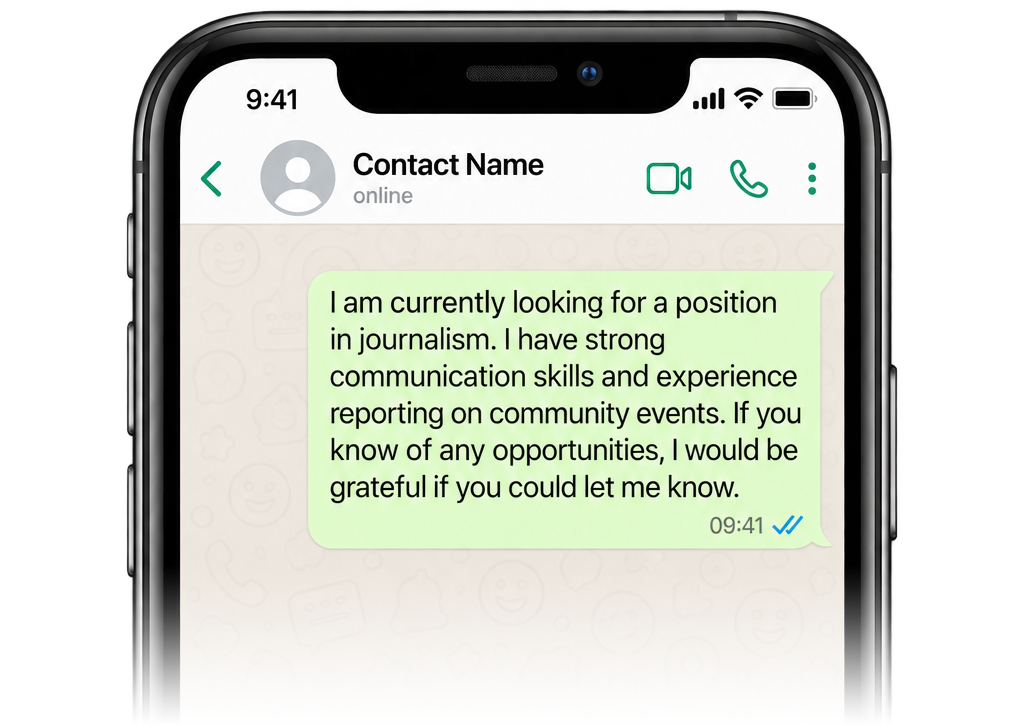
You should also consider actively approaching businesses, particularly small businesses, kiosks and market traders. While you're looking for longer-term opportunities, don't underestimate the value of asking around. You may find someone who needs help, providing temporary work and income while you continue your search.
Remember, many opportunities are never widely advertised. Your network is powerful and extends beyond those you know directly – use it.
Many employers still promote opportunities through local channels, especially smaller businesses and organisations.
Look for opportunities in:
Make checking these places part of your routine.
Useful places to search include:
Tips for searching online:
Remember that online searching works best when combined with networking and local searching. If you don't have regular access to the internet, don't worry – finding something locally often doesn't require this.
Finding a job takes time, effort, and persistence. Successful job seekers create a routine and make job searching part of their weekly schedule. If you can spend your days researching jobs, applying and building your skills and experience, you will be in a much better position when opportunities arise.
It is very important to stay organised – both to keep you motivated and also to ensure you don't miss any opportunities.
Take a moment to think about your answers to the following questions. You may find it helpful to write them down.

Zoleka Lisa, Vice President of Corporate Affairs, South African Breweries
