

Before you apply for a job it's important to be clear on exactly what strengths and capabilities you can offer an employer. What are the skills, knowledge, attitudes and relationships you possess that might make an employer want to hire you?
Often, people at the beginning of their employment journey underestimate their skills because they only think about paid work as a way of building skills. In reality, your capabilities can be developed through a whole range of experiences, including:
In the last module you began to consider what you are good at using the Ikigai model. Now it's time to take this thinking further and link this more to specific capabilities you have.
BecomingX has spent years researching what it takes to perform at the highest levels and have identified four key areas that you should think about – your skills, knowledge, attitudes and relationships. These are the things most employers will be interested in. We call it the "X model" – the personal attributes of high performers.
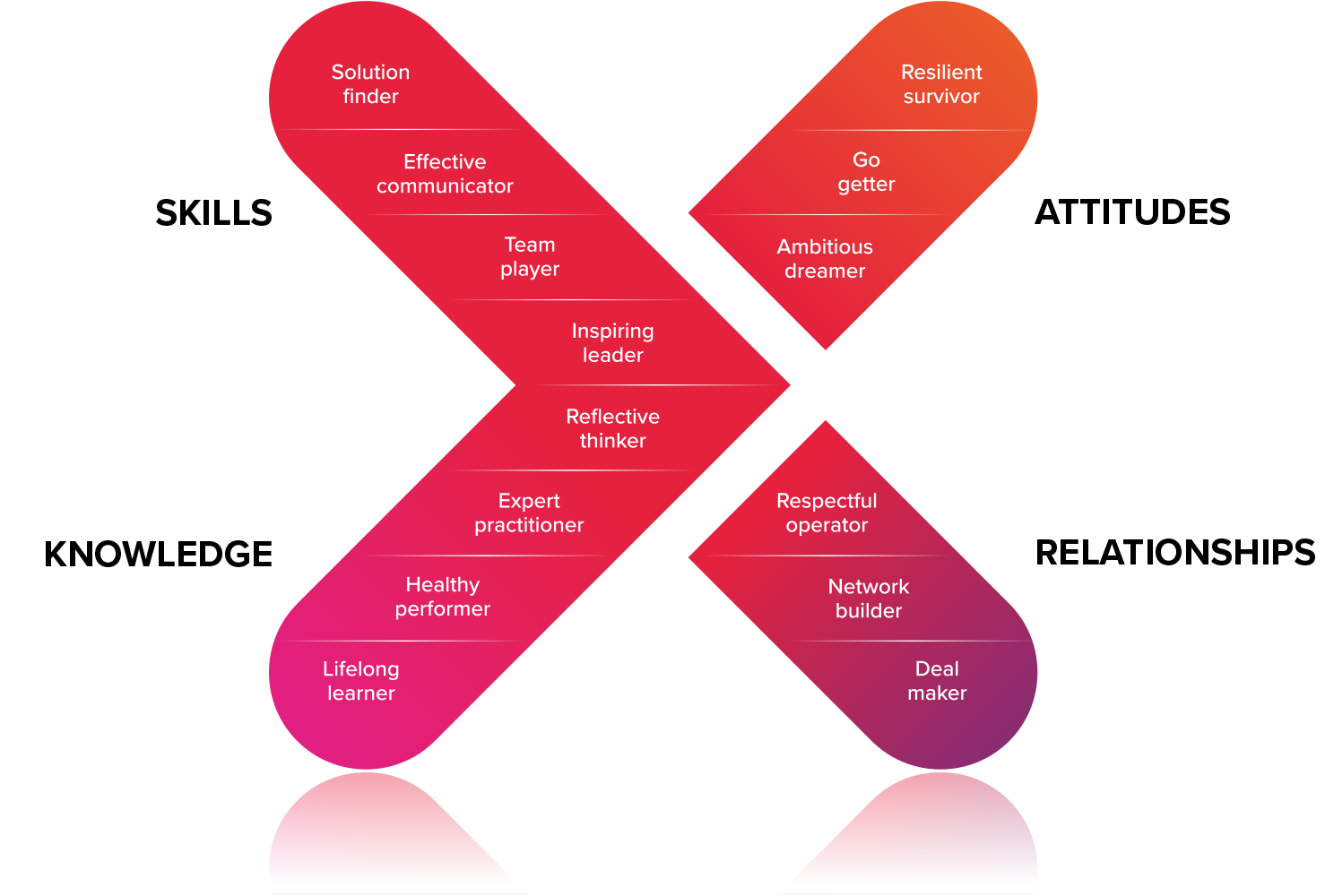
For example, you could be a good...
The better you understand your personal strengths (and development opportunities), the easier it becomes to explain why you are a good candidate in a CV, cover letter, or interview.

Boyang Mufahothe, Manager - Human Capital Business Partner, Mascom Wireless
Employers are looking for proof. You shouldn't just say "I'm a good leader" or "I'm great at talking to new people" – both are excellent skills to have, but what is your proof? How did you build that skill? Where did you demonstrate this? This is what employers need to see.
Choose five key strengths you have and then list your evidence to support that.
| Strength | Where did you develop it? | What did you do? |
|---|---|---|
| Example: Leadership | Community volunteering | Organised a community clean-up involving 20 volunteers |
| 1. | ||
| 2. | ||
| 3. | ||
| 4. | ||
| 5. |
In the following sections we will cover how to structure these in both written (e.g. CVs/cover letters) and verbal (e.g interviews) formats.
