3
Better understand yourself
Ikigai
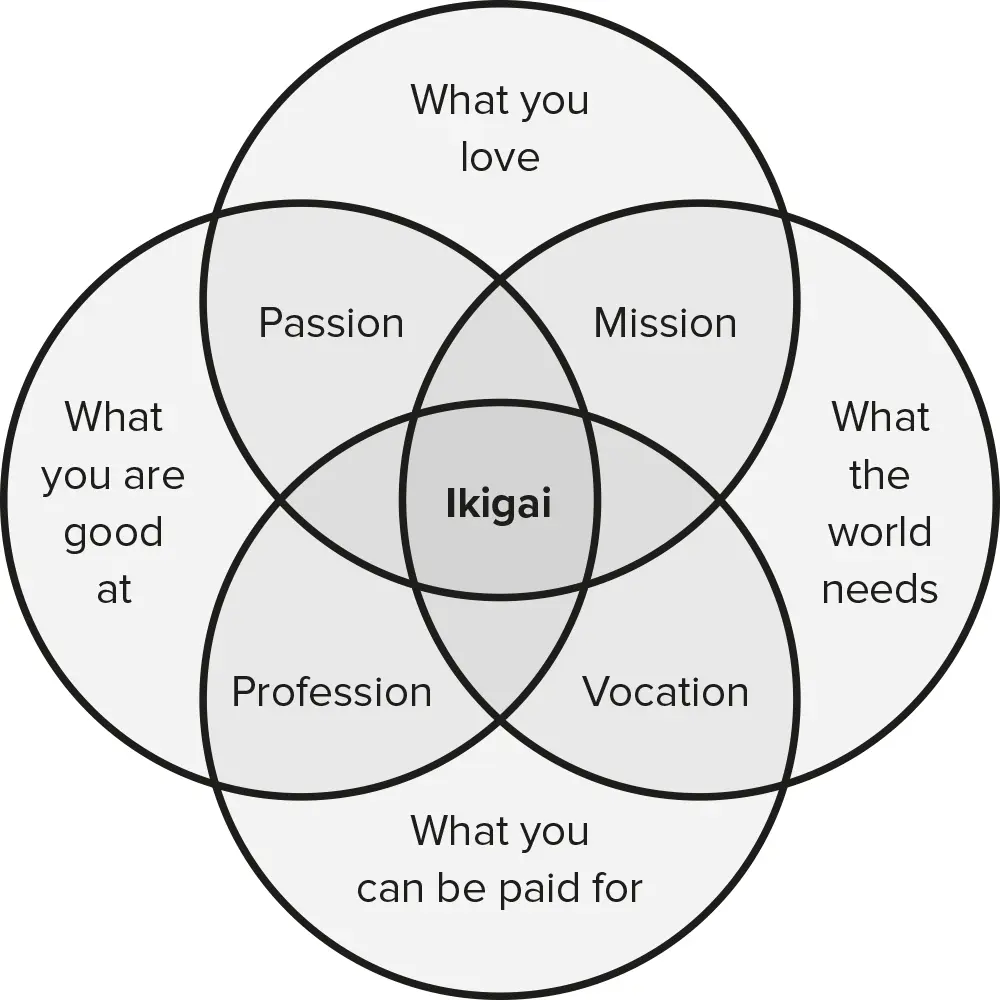
Ikigai (pronounced ee-key-guy) is a Japanese concept that loosely translates as “a reason for being”. It is a helpful way to think about careers by exploring four important areas:
- What you love
- What you are good at
- What the world needs
- What you can be paid for
When these four areas overlap, they can help you identify work that feels both meaningful and practical.
Ikigai is not about finding one perfect job, but about understanding yourself better so you can make career choices that match your strengths, interests, and real opportunities around you.
One of the biggest mistakes that young people make is trying to choose a career before they've actually taken the time to understand themselves. So the encouragement from my end is to firstly, before even researching anything, identify what you're into. What are your interests? What are your strengths? What do you hold really dear or close to your beliefs or values? That will give some sort of direction around the kind of work you'd want to be exposed to or environment that you'd want to see yourself in. The selection really of careers is not simply about choosing a job title or position, but more a career that really should align with who you are and what motivates you.
Boyang Mufahothe, Manager - Human Capital Business Partner, Mascom Wireless
Activity: Your Ikigai reflection
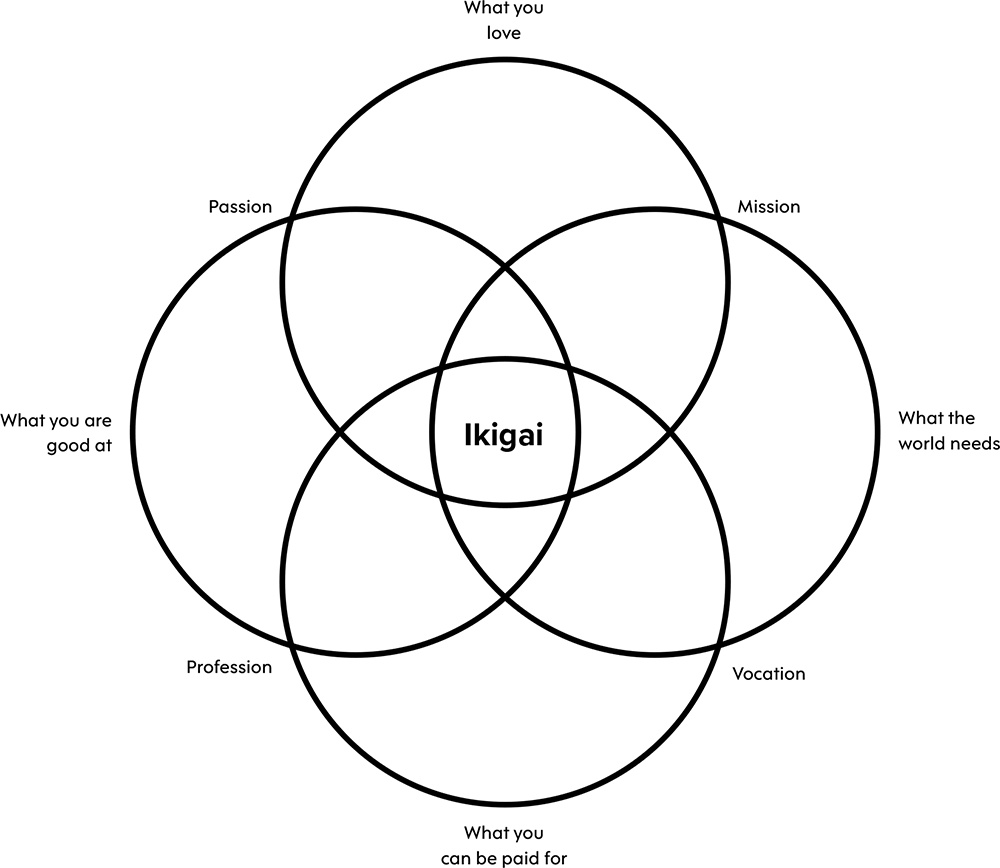
Take a look at the diagram below. Copy it onto a sheet of paper and try to put something in each section, starting with the four key questions in the big circles first:
What do you love?
What are you good at?
What does the world need?
What can you be paid for?
Can anything overlap into more than one section? Take notice of where you see the most overlap – perhaps you have something that fits in two, three, or maybe even four categories? Could this be something you could research further as a potential career option?
Reflect
You may want to make some notes.
What have assessing your needs and your Ikigai taught you about choosing your path so far?
Introduction
1
2
3
4
5
6
7
Conclusion