

Now you've started to think about your passions, your skills, and your needs a bit more, it's time to start researching what is actually out there.
Gather real information about possible roles, industries and career paths you might be interested in to better understand key information such as:
Online:
If accessible, you can do a lot of research online about different career options.
Use tools like:
*People often vlog about their lives in their chosen industry.
Search for:
Your existing network:
If online research isn't an option don't worry, some of the best advice and insight can come from the people around you. They may even know of opportunities you cannot see online.
Ask if you can speak to them about their job, what it's like and how they got there. Speak to:
Work experience:
Work experience is where a business allows you to spend some time with them (normally a couple of days) learning more about the work they do. It helps build skills and gives you ideas for the future.
Even just a few days work can help you better understand whether you enjoy that type of job, and what skills it requires – skills you may already have or may need to build.
Remember, it doesn't have to be in your dream role! Work experience can teach you just as much about what isn't a good fit for you as what is.
Reach out to employers in your local community and see if they have any opportunities available.
LinkedIn is a professional networking platform, where you can build a career profile and get greater insight into various industries, companies, and working professionals.
LinkedIn helps you:
If you don't use LinkedIn but want to, sign up for free online at linkedin.com. You can find advice on how to present your profile in Module XXX LINK.
1) Start with your existing connections
If you already use LinkedIn, look at your current connections first. You can use LinkedIn filters to search by:
This helps you find people already working in careers you want to explore.
2) Find new connections
Search for companies you are interested in, then:
Try to connect with someone slightly ahead of you in their career journey – for example, it could be a junior marketing executive rather than a CEO. They are often more likely to reply and share useful advice.
3) Send a connection request
With a connection request you have the option to send a message. Do this and keep your message:
4) Message after they accept
Once connected:
An example follow-up message:
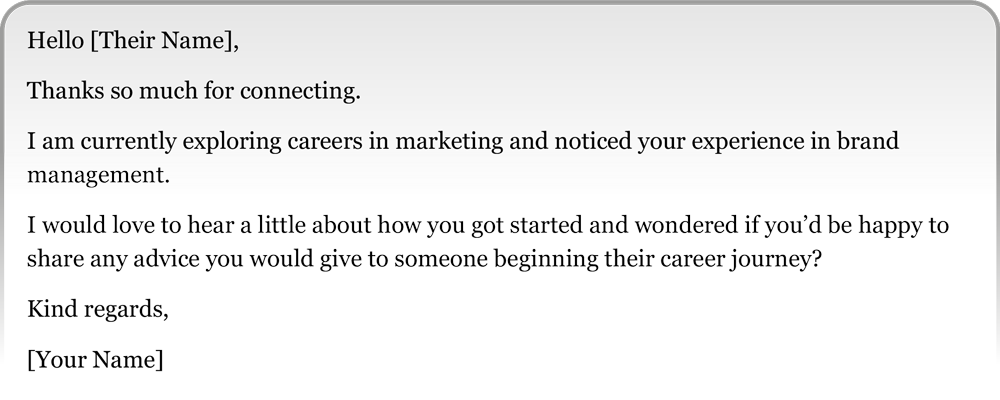
Remember, not everyone will reply – and that is ok! There's plenty you can learn just from someone's profile and what they post. If they don't respond, wait about one week before sending one polite follow-up message. After that, move on and find other people to connect with.
Overall, your research should help you answer these types of questions:

Boyang Mufahothe, Manager - Human Capital Business Partner, Mascom Wireless
Start thinking about what you're interested in finding out more about and how you could research this. You'll set clear goals around this in section six.
