

Your personal brand is what other people think of you. Whether you realise it or not, everyone has a personal brand, and it is your job to take ownership of it and manage it.
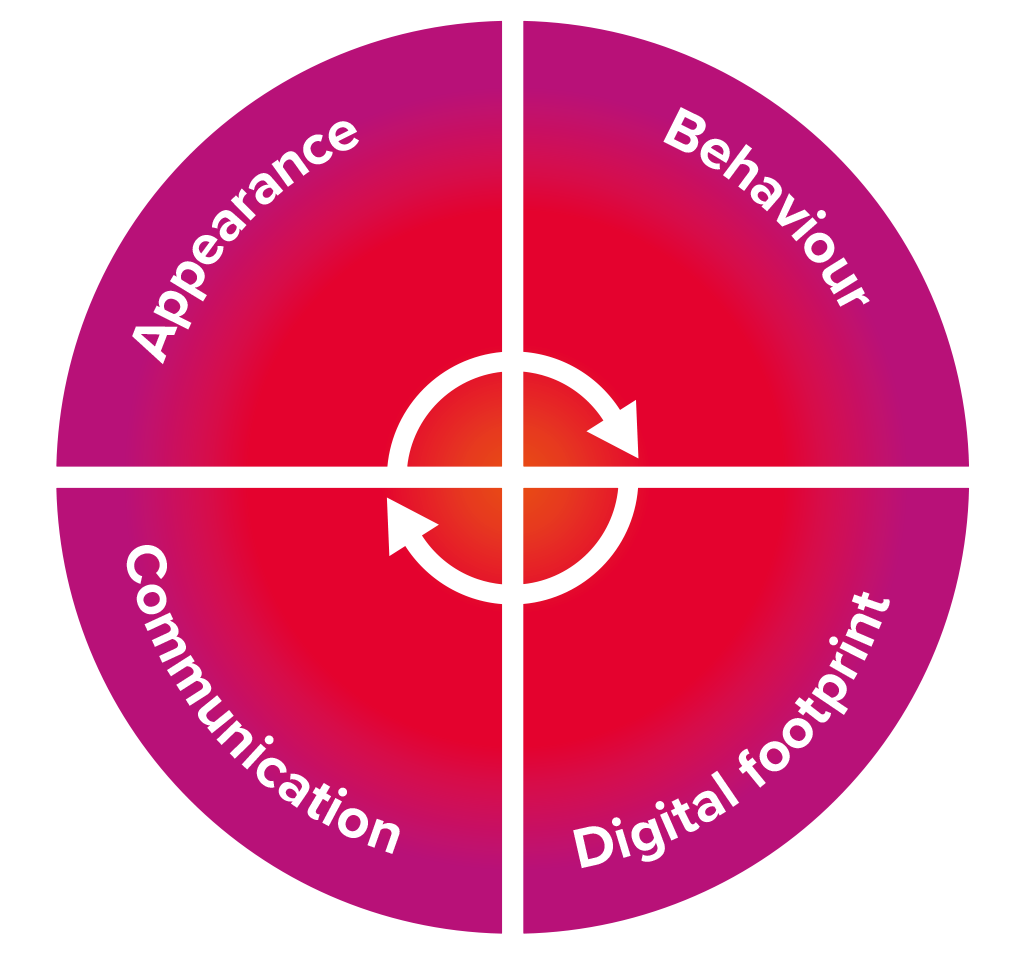
Your personal brand is influenced by four things: Appearance, Behaviour, Communication and Digital Footprint.
Appearance: How you show up both virtually and face-to-face. This includes:
Behaviour: How you act in professional and social settings. This could include:
Communication: What you tell the world about yourself, both through your words and your body language. This could include:
Digital Footprint: How you portray yourself online. Consider:
When starting to think about taking ownership and managing your brand, a great place to start is to take the time to reflect on:
The following steps will help you define what you would like your brand to be.
Step 1: Gather feedback
Ask three people you know well: "When you think of me, what three words come to mind?"
| Person 1 | |||
| Person 2 | |||
| Person 3 |
Step 2: Reflect on the brand you want to build
Think about the personal brand you would like to develop.
Write down five words or short phrases you would like people to use when describing you:
| 1 | |
| 2 | |
| 3 | |
| 4 | |
| 5 |
Step 3: Building the brand you want
Now compare the feedback you received from others with the personal brand you would like to build.
Step 4: Create your personal brand statement
Using everything you've learned so far, write a short personal brand statement. This should describe who you are, what you are passionate about and how you would like to be known by others.
Your statement doesn't need to be perfect. The goal is to create a starting point that you can continue to refine as you gain more experience.
Example:
I am a dependable and hardworking person who enjoys learning new skills and helping others. I want to be known for my positive attitude, willingness to learn and commitment to doing my best in everything I do.
Or:
I am passionate about using mobile technology to solve problems and create opportunities. I want to be known as someone who is reliable, innovative and always willing to support others.
Remember, personal brands are not built through words, they are built through consistent action over time. Be visible with it, actively communicate your brand, and build your network to enhance your reputation (more tips on this in Section 5).
The next section talks more about establishing your brand online and LinkedIn specifically. If you don't have regular access to LinkedIn, feel free to skip forward to section 5.
Consider using LinkedIn if you don't already. It can be a valuable tool for building your professional reputation and growing your network online.
To create a compelling profile, use the guide below:
| Profile photo |
|
| Banner image |
|
| Headline |
|
| About |
|
| Experience |
|
| Education |
|
| Recommendations |
|
Top tip
Building your first LinkedIn profile can feel overwhelming. Follow along with this beginner-friendly tutorial and pause after each section to update your own profile:
LinkedIn Tutorial for Beginners: How to Use LinkedIn & Set Up Your Profile

Marcus Stockl, Africa Client Account Director - Natural Resources and Utilities Practice, Accenture
